Hello - we need Goannas!

Goannas (also known as monitors, or bungarras, or varanids) are, sadly, often seen as roadkill on our roads in WA. As sad as this is, we can make use of their bodies for science, and you can help us!

Goanna carcasses are being collected as part of our research at the Fauna Habitat Research Group. What we want are liver and scale samples from the carcasses. These samples allow us to assess levels of persistent organic pollutants - anticoagulant rodenticides, heavy metals, and other toxins present in goannas across Western Australia. We need your assistance in collecting carcasses and your help will be greatly appreciated!

Collection Guidelines

Here's how you can help - just follow these steps!

For your health and safety, wear gloves if possible while handling any carcass. Always sanitize your hands immediately after handling any carcass.
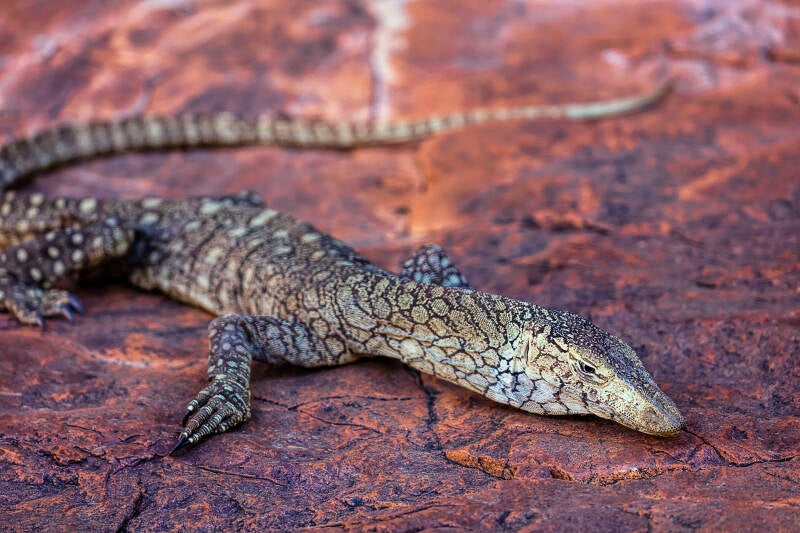
Photo by Alan Moore

Please Provide

  • Precise location where you found the carcass
    • GPS coordinates (latitude and longitude) preferred
  • Date of collection
  • Your name and contact information
    • Phone number
    • Email address
  • Cause of death for the goanna, if known
  • Species, if known
  • Photographs of the full carcass
    • Please email these to the address below with a subject line that specifies they are for this projecty 
    • Photos of the carcass before collection are preferred, but not required
    • If you plan to remove individual liver or scale samples yourself, please photograph it before removing the samples
    • This helps with determining species ID, as well as the cause of death

Collection

The carcass can be in any state and of any size or species, so long as it's a varanid (if you're not certain, take a picture and send it with the sample so that we can ID it for you!) Whole carcasses are preferred; if you do not wish to send or store the entire animal, please remove the liver and/or a section of scales. You do not need to wash your tools in ethanol before doing this.

Scales

The last 7-8 cm of the tail can be removed (with a knife, scissors, or by snapping it off). Alternatively, any 2-6 cm portion of the skin can be taken with scales attached.

Liver

If you can confidently recognise the liver in the body, please extract as much of it as possible. If you are having difficulties with extraction, please contact us directly for further information.

Storage

For partial samples, store the liver and scales separately in well-wrapped ziploc-style bags or in sealed plastic bottles or tubes. Freeze all samples or carcasses as soon as possible for the sake of hygiene. The state of the carcass will not impact our data, but it might impact your nose!

Delivery and Retrieval

Contact us when you are ready for us to retrieve the carcass, and we will arrange pickup directly with you. If the carcass is particularly small and you wish to mail it, please ensure it is in a fully enclosed container before mailing it to the address below.

Mailing

Address to Rain Dobbs, Sean Tomlinson, or Bill Bateman

Building 311 Room 144

Curtin University, Kent Street, Bentley, 6102

Email

k.dobbs@postgrad.curtin.edu.au

Phone

0428028919